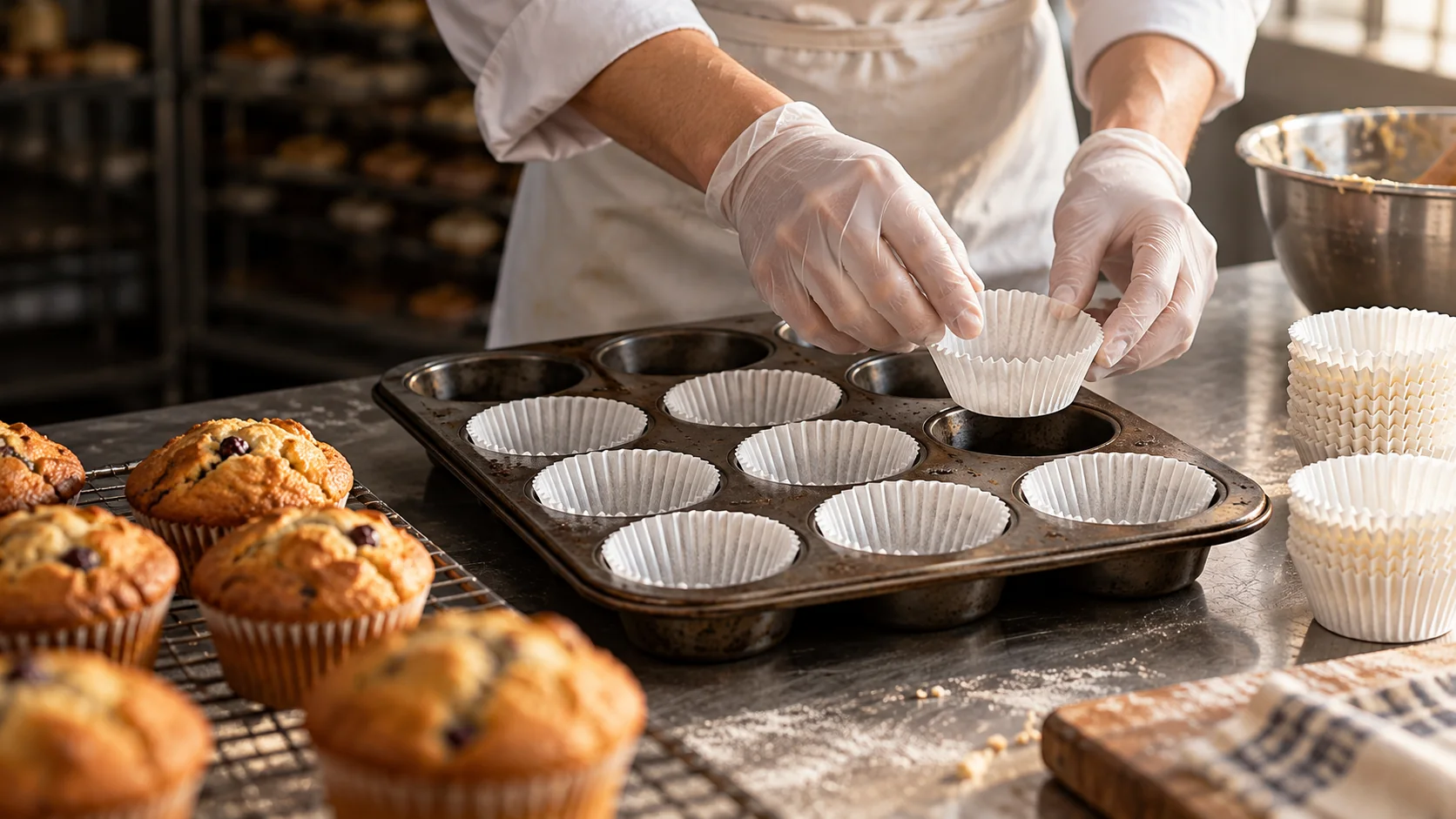
The short answer
Specify the pan, the cup and the sales pack as one item.
A liner that looks right in a product photo can sit badly in a production pan. Start with the pan cavity and target portion, approve the paper construction on a real bake, then define how the cups will be packed for bakery use or retail sale. Keep the approved sample and drawing with the repeat order.
01 / Size and pan fit
A base diameter is only the first measurement.
Paper baking cups are commonly quoted by base diameter and wall height. That notation is useful for shortlisting, but it does not describe the top opening or the pan cavity. Put all three parts on the same drawing.
Pan cavity
Measure the base, opening and depth of the actual production pan. Check the corner profile if the cavity is not a simple taper.
Finished cup
Record the liner base diameter, top opening and wall height. State the fold or pleat style and whether the cup must sit below or above the pan rim.
Baked portion
Give the target batter fill and finished muffin height. A tall paper wall changes presentation, but it must still work with your fill and bake.
Working size references
Use a listed size to begin the trial, then approve the actual cup.
These paper baking cup references are stated as base diameter × cup height. They are starting points for sampling; final dimensions, top opening, availability and pack quantity belong on the selected item specification.
A 47 × 37 mm cup and a 65 × 28 mm cup solve different portion and presentation needs even though both are called muffin liners. Test them in your own pan before asking for a custom color or pack.
| Base × height | Listed pack reference |
|---|---|
| 38 × 21 mm | 1,000 pieces |
| 43 × 27 mm | 1,000 pieces |
| 50 × 35 mm | 1,000 pieces |
| 52 × 30 mm | 1,000 pieces |
| 47 × 37 mm | 600 or 1,000 pieces |
| 65 × 28 mm | 1,000 pieces |
| 78 × 31 mm | 1,000 pieces |
| 78 × 35 mm | 1,000 pieces |
02 / Paper construction
Write down the paper you are testing.
“Greaseproof” and “silicone-coated” describe different details of a cup. Ask for the selected paper grade, coating or release treatment, and whether the food-facing side is specified. The sample, quote and repeat order should all point to the same construction.
Confirm suitability for the actual oven program and request food-contact documents for the destination market. Do not transfer a temperature or compliance statement from another paper cup to this one.
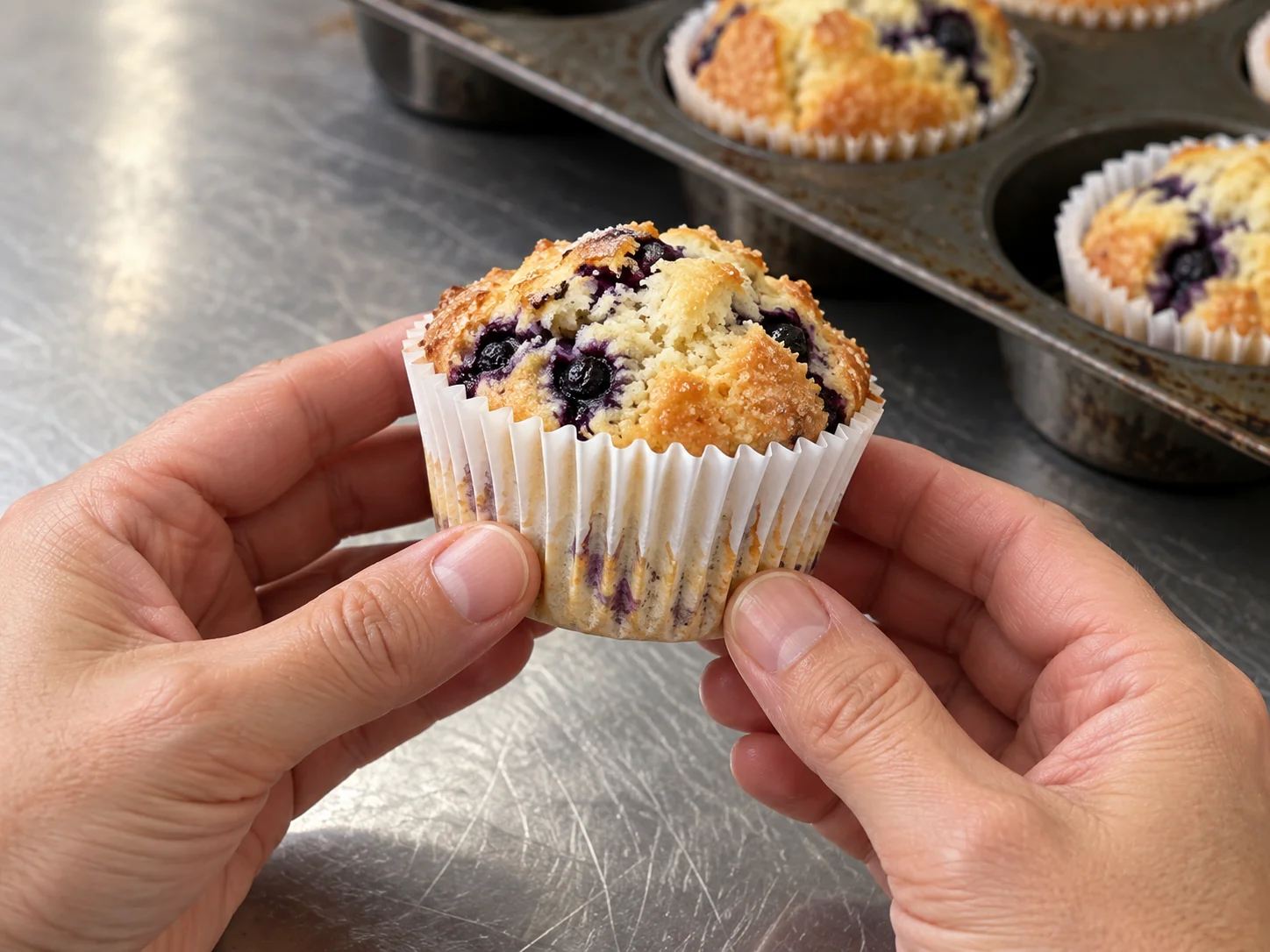 Test the paper on the muffin you actually sell.
03 / Sample checks
Run the liner through one normal bakery cycle.
Load it into the production pan, fill with the usual batter and bake on the regular program. Check more than one cup; a single neat sample does not show whether a nested stack separates consistently.
- Before filling: Does the cup sit flat, open cleanly and hold its shape in the pan?
- After baking: Look for sidewall collapse, grease show-through, discoloration and uneven pleats.
- At service: Peel the liner from the cooled muffin and inspect the crumb, sidewall and finished presentation.
- At the packing bench: Count, stack and dispense the cups as the bakery or retailer will use them.
Photograph the baked result and retain a labeled approved sample for reorder checks.
04 / Two buying programs
The same cup needs a different pack brief.
Decide whether the cups go to a bakery production line or to a retail shelf before approving the outer pack. The paper can be identical while the count, presentation and carton work differ.
Keep the line moving
Specify the number of cups per sleeve or bag, how stacks are protected and how staff pull one cup at a time. Test the pack after storage and transport, not only when it is freshly opened.
- Pieces per inner pack and per carton
- Stack height and separation
- Carton identification for reorders
Approve the saleable unit
Define the consumer pack count, visible color, artwork, barcode ownership, label information and how the liner is protected inside the pack. Review a finished pack mockup before production.
- Consumer pack and display format
- Print files and approved color sample
- Master carton and case labeling
White is the reference color for this paper-cup range. For a custom color or print, send the intended artwork and request an item-specific sample and feasibility review.
A brief the factory can work from
Send the pan drawing with the liner request.
Include the food, the pan and the pack. If you have an existing liner that fits, send it with a photo of the finished muffin and state what needs to change.
Discuss custom muffin liners
Buyer questions
Custom muffin liner FAQ
Which measurements should I send for a custom muffin liner?
Send the pan cavity base diameter, opening diameter and depth, plus the target muffin size. Specify the liner base diameter, top opening and wall height on the approved drawing. A catalog size written as base diameter by height does not give the top opening.
Can a muffin liner be used without a muffin pan?
Do not assume a flexible pleated paper cup will support wet batter on its own. Test the selected liner in the intended pan or support tray with the actual batter and fill level.
What should a bakery check in a paper liner sample?
Seat the liner in the production pan, fill and bake the normal recipe, then check wall shape, grease show-through, release, paper separation and the appearance after cooling. Repeat with enough cups to catch variation across the sample pack.
What changes for a retail muffin liner pack?
Confirm the pieces per consumer pack, pack dimensions, label and artwork requirements, barcode ownership, inner protection and master carton. Approve both the liner sample and the finished pack before production.
Are coating, oven temperature and food-contact documents standard across all liners?
No. Confirm the paper and coating construction, intended bake conditions and required food-contact documents for the selected item and destination market. Keep these details on the approved specification.