The B2B Link for Baking Supplies
Worldwide Shipping[email protected]

Wholesale • Custom • Private label

Wholesale baking supplies.
A range built for your buyers.

Bakeware, silicone mats, tools, baking paper and packaging—sourced around your product list, selling format and delivery requirements.

BakewareLink coordinates multi-category B2B sourcing, from product selection and sample review to packing and shipment planning. Each line is quoted against a defined specification and order configuration.

Distributors & importersBakery supply wholesalersRetail & ecommerce brands
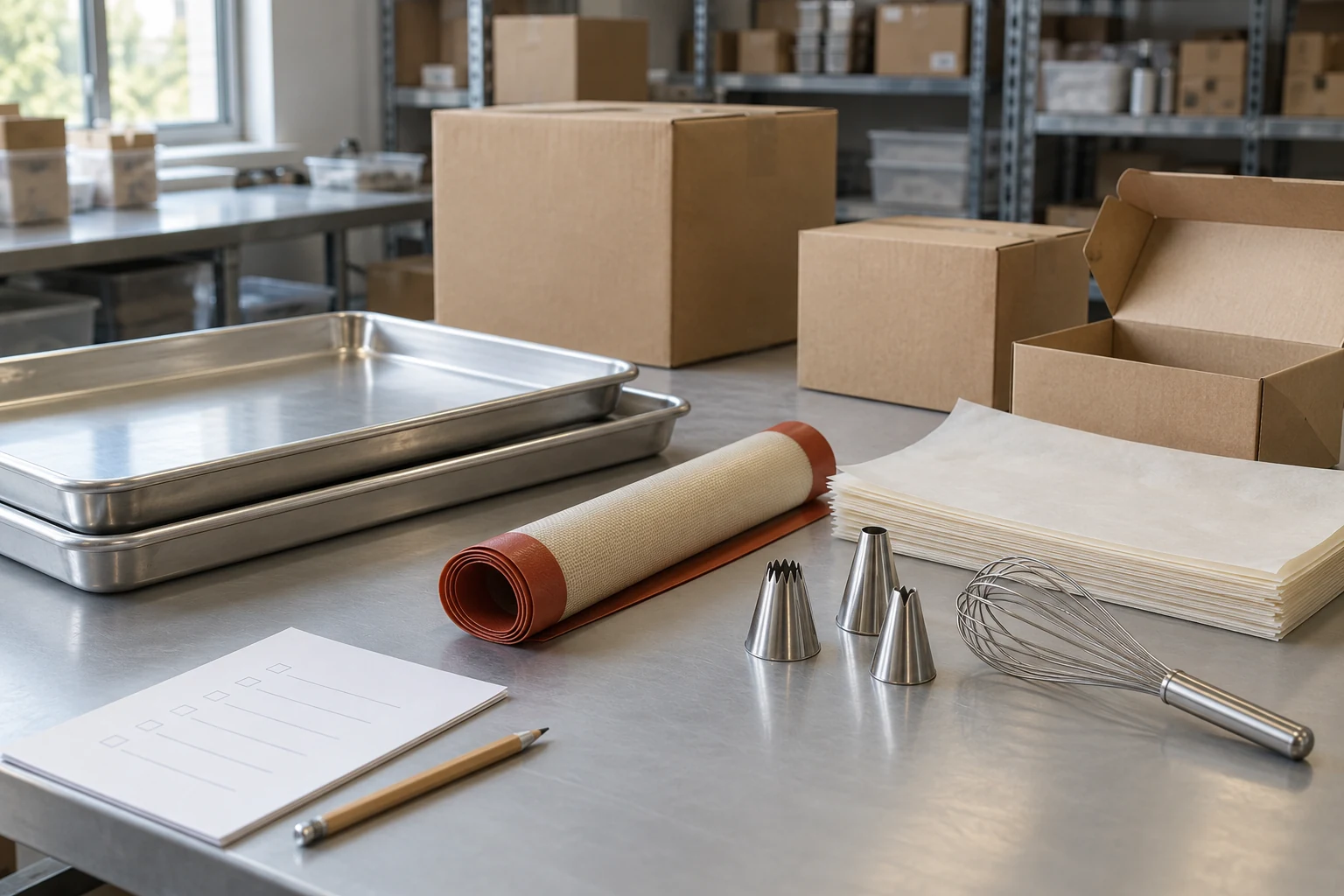
Unbranded baking trays, silicone mat, pastry tools, paper and kraft boxes arranged for a wholesale assortment review
Product, pack and carton review · illustrative sourcing scene

Choose by application

Five categories. One itemized purchase list.

A useful wholesale range covers the jobs your customers need to do: shape, line, prepare, bake and pack. Define the working requirement for each category before choosing variants.

01

Bakeware

Baking pans, sheet trays & molds

Build the range around the baked product and the equipment your customers use. Tray names alone do not establish oven, rack or liner fit.

Define first

Outside dimensions, usable base, depth, material, thickness and finish.

Browse category
02

Silicone baking supplies

Reusable mats & silicone molds

Choose mat formats for tray lining and mold formats for the required shape. Keep solid mats, reinforced mats and open-mesh liners as distinct specifications.

Define first

Dimensions, construction, thickness, cavity layout and cleaning requirements.

Browse category
03

Baking tools

Pastry, preparation & decorating tools

Select tools by task, working size and set contents. An assortment needs a clear component list so a replacement or repeat order matches the original pack.

Define first

Tool dimensions, material, component count and individual or set packing.

Browse category
04

Baking paper & liners

Parchment, pre-cut liners & food wrap

Separate oven-lining products from wrapping and presentation paper. Specify the intended use before comparing sheet, roll, liner or printed-paper options.

Define first

Paper grade, sheet size or roll width, coating, print and count per pack.

Browse category
05

Bakery packaging

Bakery boxes, inserts & presentation packs

Start with the finished bakery item, including height and clearance. Product-contact layers, carrying strength and printed presentation need separate approval.

Define first

Internal size, board or material, insert layout, closure and artwork.

Browse category

Working across tray systems? Match liners to the usable pan base and confirm rack fit with the outside dimensions. Check the sheet-pan size guide →

Choose the buying configuration

The same product can need a different supply route.

Professional-use packs and consumer retail packs carry different requirements. Separate them at quotation, even when they use the same base product.

Professional supply

Bulk packs for bakery use

For bakery distributors, foodservice suppliers and production buyers. Start with working dimensions, replacement needs and a practical handling unit.

  • Product specification and usable fit
  • Pieces or sheets per inner pack
  • Protection, carton count and identification
Distributor applications

Resale assortment

Retail & private-label packs

For retail buyers and ecommerce brands. Define what the customer receives, then quote the product and its complete selling pack together.

  • Exact set contents and variant mix
  • Artwork, barcode placement and pack language
  • Retail-pack dimensions and master-carton layout
Private-label options

Defined specification

Custom sizes & configurations

For a range with specific size, material, color or pack requirements. A drawing or reference sample establishes the starting point for feasibility and sampling.

  • Controlled dimensions and tolerances
  • Material, finish and marking requirements
  • Sample route and approval criteria
Custom supply options

Comparable wholesale pricing

Agree what the price includes.

A lower unit price means little if the unit, material, pack contents or delivery scope differs. The quotation needs an individual line for each approved configuration.

Details that belong beside each quoted product line
Quotation fieldWhat to confirmWhy it matters
Product identityReference, drawing revision, material, dimensions and selected variant.Prevents two similar-looking products from being treated as the same SKU.
Order quantity & unitQuantity per SKU, per size and per color; price per piece, set, pack, roll or weight.Makes the quoted unit price and order total comparable.
Packing configurationContents per selling unit, inners per carton, labels and required protection.Connects product cost to receiving, resale and shipment volume.
Sample & acceptanceSample type, dimensional checks, functional trial, artwork proof and agreed inspection criteria.Defines what must be approved before an order is released.
Destination & timingCountry, city or port, shipping basis and required arrival window.Separates production readiness from transport and arrival planning.

A practical unit check

2,400 mats do not always mean 2,400 selling units.

For a loose-piece order, 2,400 mats are 2,400 product units. Packed two per retail set, the same quantity becomes 1,200 selling units. The retail offer must include the cost and dimensions of the complete set.

If an approved carton holds 24 of those sets, the order is 50 cartons. Confirm carton fit and protection before fixing that packing count.

2,400individual mats
1,200two-mat retail sets
50master cartons

Illustrative calculation. Pack contents and carton capacity are confirmed for each order.

Commercial details to settle with the product price

  • Minimum quantities: per SKU, dimension, color and branded-pack configuration; identify a separate packaging minimum where applicable.
  • One-time charges: sampling, tooling, print setup or artwork development, separated from recurring product and packing cost.
  • Delivery scope: named shipping basis and destination, freight inclusion, shipment arrangement and any quoted handling charges.
  • Order terms: payment stages, offer validity and the event that starts the confirmed production schedule.
Use the detailed RFQ checklist & template

Coordinating a mixed assortment

One purchase list.
A readiness plan for every line.

Metal bakeware, silicone, printed paper and retail boxes can follow different production and approval schedules. Consolidation starts with those differences recorded, then a clear decision about when to ship.

  1. 01

    Product ready

    Record the specification, sample approval and expected completion for each SKU.

  2. 02

    Pack ready

    Confirm artwork, pack materials, set assembly and carton configuration.

  3. 03

    Order released

    Complete the agreed checks, quantities, packing list and shipment documents.

  4. 04

    Shipment arranged

    Match the ready goods to the confirmed booking and delivery scope.

Consolidated shipment

Ship the agreed assortment together after the last required line is ready and released. This keeps receiving coordinated, but a late printed pack can hold back finished products. Review the complete order before promising an arrival date.

Staged shipments

Release ready items separately when an opening order or stock gap needs priority. Confirm the revised freight, handling, documents and receiving arrangements. Splitting the order is a separate shipping decision.

Discuss a mixed-category sourcing plan

Build the record for replenishment

A repeat order starts with a controlled SKU record.

Keep the approved product, packaging and shipment information together. This gives purchasing, sales and receiving teams the same reference when a range is reordered or expanded.

01

Product revision

Keep the approved size, material, thickness, finish and drawing together. A product name is not a complete reorder specification.

02

Approved reference

Retain the sample reference, dated approval and recorded check results. Document any accepted variation before repeating the order.

03

Pack & artwork revision

Record set contents, pack language, print file version and barcode location. A new pack is a configuration change.

04

Carton data

Maintain contents, carton dimensions, gross and net weights, marks and packing photographs for the confirmed configuration.

05

SKU-level demand

Forecast each size and variant. Separate frequent paper and packaging replenishment from slower replacement of reusable bakeware.

06

Change record

Identify substitutions or changes to material, coating, dimensions, color and packaging. Obtain approval before treating them as repeat supply.

Product information belongs to the selected configuration.

Request product data, approved images, care instructions and the documentation required for your destination and intended use. Match any declaration or test record to the actual material, coating or print. A document for one variant does not establish the specification of another.

For branded ranges, include the approved packaging and artwork in the same record. See the private-label approval process →

From assortment to order

Start with the list you already have.

A spreadsheet, catalog selection or a short brief is enough to begin the review. Unresolved specifications can be listed as open questions rather than hidden inside a general quantity request.

  1. 01

    Send an itemized list

    Use catalog references, drawings or photos. Add quantity per configuration, intended use, target channel and destination.

  2. 02

    Resolve the open details

    Review product suitability, packing units, customization and sample needs. Keep confirmed details separate from proposed alternatives.

  3. 03

    Approve the configuration

    Check the sample and pack proof against the written specification. Confirm itemized pricing, MOQ, schedule and delivery scope.

  4. 04

    Release & record the order

    Agree the inspection and packing requirements, shipment plan and documents. Retain the approved record for replenishment.

Already choosing specific items? Keep the product reference and selected options beside each quantity.

Browse the product catalog →

Wholesale sourcing FAQ

Order, packing and supply questions.

These details are confirmed against the product configuration, quantity and destination in your brief.

Who does BakewareLink supply wholesale baking products to?

BakewareLink works with bakery distributors, importers, foodservice suppliers, wholesalers, retail buyers and private-label brands. We organize product selection, specification, packaging and supply coordination around the buying brief. Include your sales channel and intended use so the proposed assortment fits the customer you serve.

Can bakeware, silicone mats, paper and packaging be included in one inquiry?

Yes. Put each category on one itemized purchase list, with specifications and quantities per configuration. Each product line retains its own minimum quantity, sample requirements and readiness date. A combined inquiry starts the review; the confirmed supply and shipment plan establishes how the items are ordered and delivered.

What is the minimum order quantity for wholesale baking supplies?

MOQ is confirmed for each product and configuration. A standard unbranded format, a custom dimension and a printed retail pack can have different minimums. State the quantity by SKU, size, color and pack rather than a single total for the assortment. Product and printed-pack minimums are reviewed separately where they differ.

Are wholesale baking products available from stock?

Availability must be confirmed against the selected SKU, quantity and pack configuration at quotation. A catalog listing does not establish stock availability. Custom dimensions, logo work and printed packaging require their own production and approval schedule.

Can I order bulk and branded retail packs of the same product?

Yes, both configurations can be reviewed in the same brief. List them separately with their respective quantities and pack contents. A loose piece and a two-piece retail set use different quotation units, packing specifications and carton counts, even when the underlying product is identical.

Can samples be reviewed before a bulk order?

Yes. Specify whether you need an existing product sample, a custom product sample, an artwork proof or a finished retail-pack sample. Sample costs, courier arrangements, development work and timing are confirmed for the chosen route. Approval records should identify the exact configuration intended for bulk supply.

What determines the delivery schedule for a mixed order?

The schedule depends on the readiness of each product, sample and artwork approval, packing completion and the agreed shipment arrangement. Consolidation waits for the last required line to be ready and released. A staged shipment can move ready items earlier, but changes the freight, handling and document scope. Confirm the choice before releasing the order.

What product information should I request for resale and repeat orders?

Request the confirmed product specifications, set contents, pack and carton data, approved artwork and product images, care instructions and agreed destination-market documentation. Match any test or declaration to the actual material, finish and intended use. Keep revisions and approval references with the SKU so the next order can be checked against the same record.

Request an itemized wholesale quote

Tell us what your buyers need.

Send your product list, quantities and destination. Include the channel, pack format and delivery window so the review starts with the right configuration.

  • Product references, dimensions and intended use
  • Quantity per SKU, size and color
  • Bulk pieces, retail packs or exact set contents
  • Logo, label and artwork requirements
  • Delivery country, city or port and target timing
  • Sample and product-documentation requirements

For several products, list each item on a separate line in the message. State which details are fixed and which need a proposal.

Plan your wholesale assortment